Glimpse of the Past

I just found this photograph on my hard drive. I don’t know where it came from; I have no memory of seeing it before. It is a low-resolution image, grainy and shadowed. Three men on a bench: one wearing a suit and tie (you can almost make out the time on his wristwatch); one slouching in a white T-shirt; one with a cigarette in his left hand. Looking at the picture makes my heart pound.

I never met any of them (they died in 1957, 1987, and 1984), but I recognize their faces. A Hungarian, an American, a Pole. They appear in at least three of my books (prominently or in passing). I don’t know who made the photograph or when (maybe a reader can tell me)—except that once you know who they are, you know exactly where they are and you know the date, or pretty close.

There’s something awesome about a random glimpse into history. It’s just a point in spacetime. I’d give a lot to be a fly on the wall.

Posted in | | 15 Comments

Your Whereabouts, Revealed

A couple of British software engineers have just discovered that your iPhone (if, you know, you happen to have one) keeps a permanent detailed record of your movements. Whenever you sync your phone with a computer, the record goes there, too. They’ve written some quick and dirty software to demonstrate. In a matter of seconds, you can see every place you’ve been:


This particular map isn’t me; it’s one of them. I suddenly feel a little queasy about showing everyone where I’ve been. Which is, of course, the point.

They are Alasdair Allan, an astronomer at the University of Exeter, and Pete Warden, formerly of Apple and now living in Boulder. They happened to be collaborating on some projects for visualizing location data—for example, making maps of radiation levels in Japan—when one of them stumbled across a hidden
Continue reading “Your Whereabouts, Revealed” »

Posted in | | 3 Comments

Where Are They Now: Bell Labs

Claude Shannon’s managers were willing to leave him alone, even though they did not understand exactly what he was working on. AT&T at mid-century did not demand instant gratification from its research division. It allowed detours into mathematics or astrophysics with no apparent purpose.
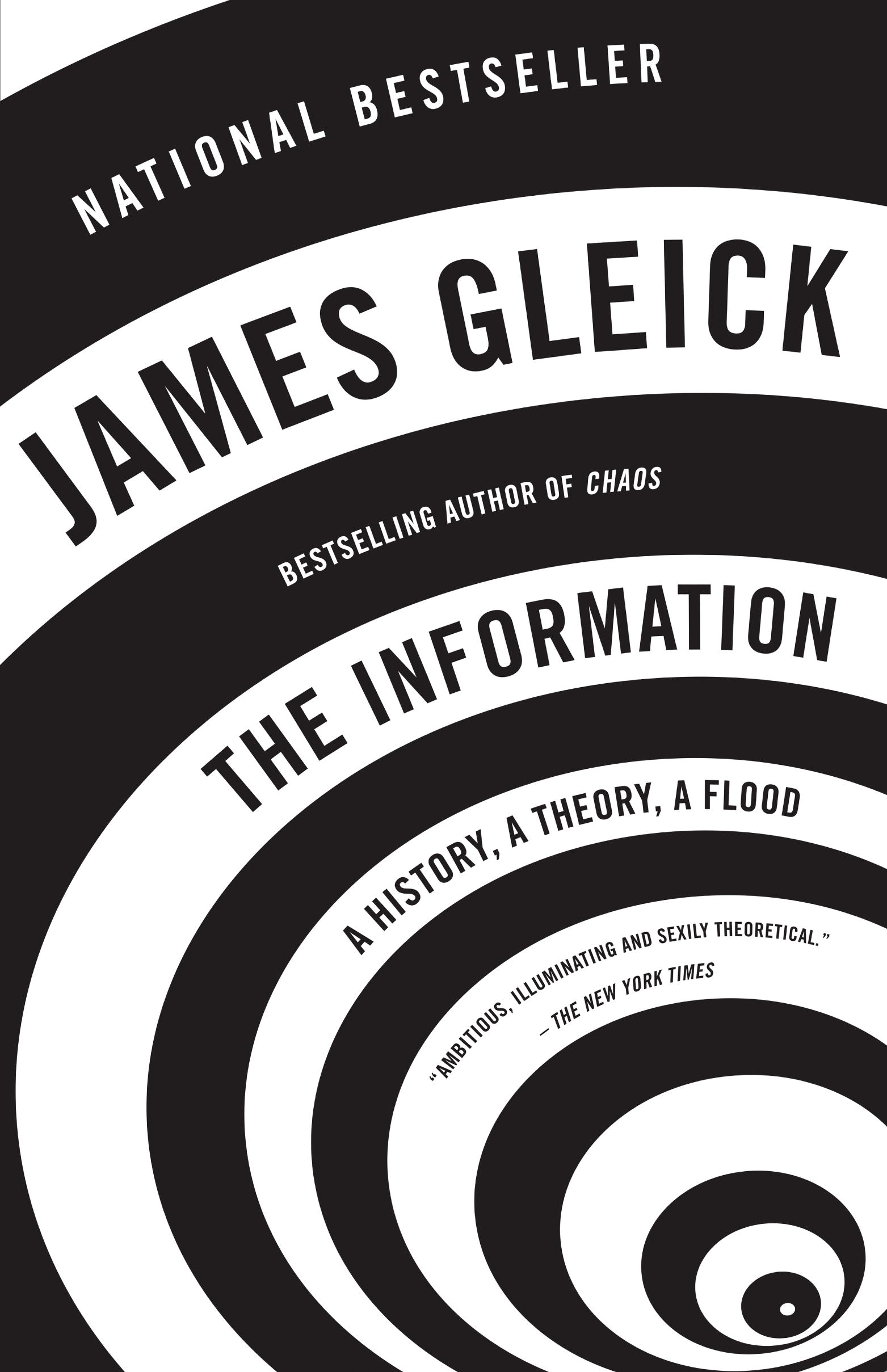
The Information

Information theory was born at Bell Labs; so was the transistor. Bell Labs scientists laid foundations for radio astronomy and the laser. When I first visited, in 1993, Arno Penzias was running the place as Chief Scientist; he was just one of the laboratory’s many winners of the Nobel Prize in Physics, for his discovery of the cosmic black-body radiation echoing across the universe from the Big Bang.

Not many corporate research labs have ever operated with such far-sighted freedom from the bottom line. Now hardly any do.

Claude Shannon did his great work in a cubbyhole in this 1900 building, the old New York headquarters,Bell Labs in New York the Hudson River to the west, Greenwich Village to the east. That’s the High Line running through it. The building is still there: an artists’ cooperative.

AT&T spun off most of Bell Labs into the new Lucent Technologies in 1996; now it’s a French-owned company, Alcatel-Lucent. They still boast about what they now call Alcatel-Lucent Bell Labs. But basic science, physics, and mathematics are gone. In 2008, the company issued this magnificent specimen of business-speak: “In the new innovation model, research needs to keep addressing the need of the mother company.”

A smaller chunk of the labs remains with the parent company, and AT&T Labs, too, continues to lay claim to a proud tradition. Here is a tribute page to Shannon, headlined, Juggling Genius Claude Shannon Launched the Digital Age. (Juggling genius? Really?)

So I was particularly glad to get
Continue reading “Where Are They Now: Bell Labs” »

Posted in | | 4 Comments

Face Direction of Travel

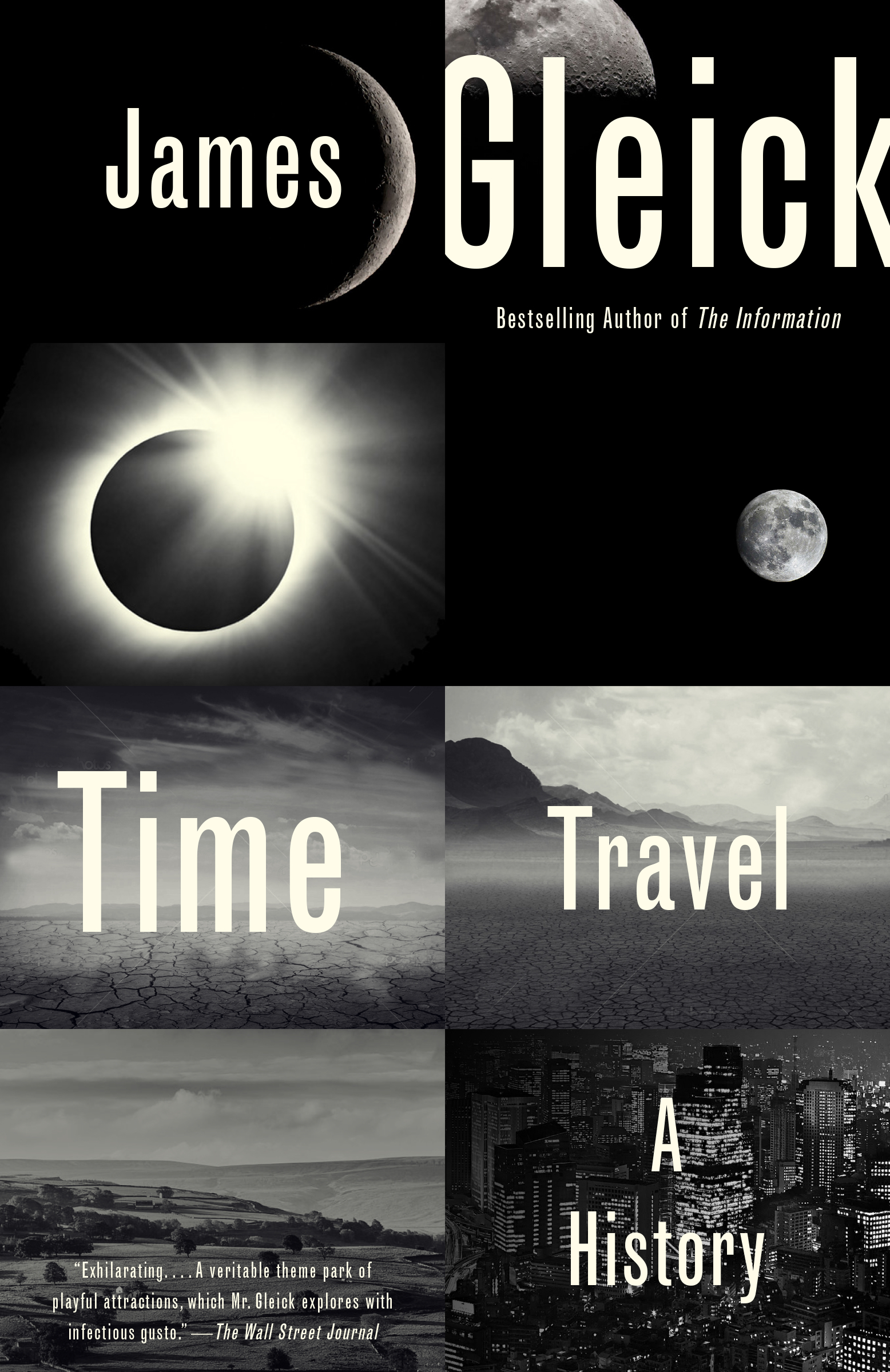
I’m just back from a short trip to England to talk about The Information. There was a lot of tweeting.

For example, while I was speaking early one afternoon at the Royal Society for the Encouragement of Arts, Manufactures and Commerce, some in the audience were surreptitiously thumbing their little devices. Or not even surreptitiously—there was an official hashtag. One listener tweeted in real time:

James Gleick talk at the RSA “The Information”. Interesting nuggets, but I’m not really getting the big picture.

I entirely sympathize. Two days later, at the British Library, I interrupted myself and asked whether anyone was tweeting. I didn’t see any hands go up. I hope I didn’t sound confrontational about it. I could read their tweets afterward.

The BBC correspondent Nick Higham interviewed me at the Science Museum for his program, Meet the Author, and immediately tweeted as follows:

I guess not. I’m trying, though.

Posted in | | 1 Comment

Information is How We Know

When Kevin Kelly interviewed me about The Information for Wired, he asked me to define the word, and I was unprepared. I did some hemming and hawing (which he mercifully omitted). I see it continues to trouble him. Others have asked me the same question, and I continue to hem and haw. You might think I would have it figured out by now.

The problem of definition runs as a a minor thread throughout my book. The very idea that a word has a definition is surprisingly new—barely 400 years old. You might think it is obvious, but it is not. People managed to use words for millennia without worrying too much. John Locke felt it necessary to explain in his Essay Concerning Human Understanding:

Definition being nothing but making another understand by Words, what Idea the term defined stands for.

In the very first English dictionary, Robert Cawdrey’s Table Alphabeticall in 1604, we see that defining words is not so easy. I quote a few of my favorite Cawdrey definitions (in their entirety):

crocodile, [kind of] beast.
vapor, moisture, ayre, hote breath, or reaking.
theologie, divinitie, the science of living blessedly for ever.


Continue reading “Information is How We Know” »

Posted in | | 6 Comments

The Google Books Settlement, R.I.P.

Many people, including some I greatly respect, are gleeful about the demise of the arduously worked out settlement of the lawsuits brought by the Authors Guild and book publishers against Google. Not me.

It certainly wasn’t perfect. It involved some messy compromises, as settlements tend to do. It couldn’t satisfy everyone.

In creating a vast and widely accessible digital library, bringing back to life many forgotten books, it seemed to give Google, a private corporation, too much power over what, in an ideal world, should be a public resource. (“Public” most emphatically not being a synonym for “free.”)

So now what? I fear that many people underestimate the difficulties that lie ahead. The New York Times editorial page does, and it botches the law by saying, “Google’s loss means that, for now, its search results will show only snippets of text from books that are under copyright but out of print.”

Quite the contrary. Judge Denny Chin stated clearly that Google was not entitled to copy these books onto its servers in the first place: “Google engaged in wholesale, blatant copying, without first obtaining copyright permissions.” The settlement would have authorized Google’s storage and search of the books. That is no longer permitted.

It’s going to be hard to find a way of letting Google keep its illicitly obtained copies and fairly compensate copyright holders, because, for one thing, there are so many of them.

We’re back to a messy real world now. Perhaps the stars are finally aligned for Congress to create a National Digital Library, assembling and preserving all these books, making them searchable, and sharing them with readers in a way that fairly compensates the rightsholders. This Congress seems pretty dysfunctional, but who knows? The settlement, now defunct, at least provides a well thought-out framework for how it might be done—with or without Google.

Posted in | | 2 Comments

Ta! Ra! Ra! Boom De Yay!

Poetry or doggerel? Oh, who cares. John Horgan has unearthed and now presents some verse written by Claude Shannon in 1981, at the height of the Rubik’s Cube craze. Shannon was, of course, the creator of what is now called information theory; he is the central figure in my new book, where I mention that he liked game-playing and never lost his childlike sense of fun.

Case in point: “A Rubric on Rubik Cubics.” Shannon includes footnotes, in the spirit, he says, of T. S. Eliot’s “The Waste Land.” He advises, “this may be either read as a poem or sung to ‘Ta! Ra! Ra! Boom De Yay!’ with an eight-bar chorus.” One of the verses turns (and this, too, is entirely characteristic) to the subject of human vs. machine intelligence:

The issue’s joined in steely grip:
Man’s mind against computer chip.
With theorems wrought by Conway’s eight
‘Gainst programs writ by Thistlethwait.
Can multibillion-neuron brains
Beat multimegabit machines?
The thrust of this theistic schism—
To ferret out God’s algorism!

For the whole poem, with footnotes, back story, and entertaining commentary, see Horgan’s Scientific American blog. (Horgan, coincidentally, reviewed The Information for the Wall Street Journal.)

Posted in | | 1 Comment

Now Chaos Is “Enhanced”

“Enhanced” is the word of the day for e-books. It strikes fear into the hearts of some authors, and maybe some readers, too. There is the question of hyperlinks. Let’s say my book begins this way:

The police in the small town of Los Alamos, New Mexico, worried briefly in 1974 …

One doesn’t want the reader yanked away to a page listing the Great Luxury Hotels of Los Alamos. Or to any page. One wants the reader to get sucked into the book, there to remain.

Yet e-books have new possibilities, and authors are beginning to explore them. The very creative people at Open Road Media have now published two of my books, Chaos and Genius, in electronic form, for all devices.

The enhanced Chaos gave us a chance to illustrate some of the ideas and the science in ways that break through the limitations of the printed page. Strange attractors are not, after all, static two-dimensional objects; with videos and applets, we can present them as they were meant to be seen all along. We can fly around phase space and zoom into fractals. The Koch snowflake and the Sierpinski gasket come to life.

The publisher made a serious investment, sending film crews to interview me and several of the book’s
Continue reading “Now Chaos Is “Enhanced”” »

Posted in Chaos | 4 Comments